Rocklane
Book Call
AI intake automation

A 24/7 receptionist that books while your front desk sleeps.

Voice and chat AI trained on your service lines, providers, and tone. It answers within two rings, qualifies the patient, and books directly into your scheduler, escalating to a human only when policy requires.

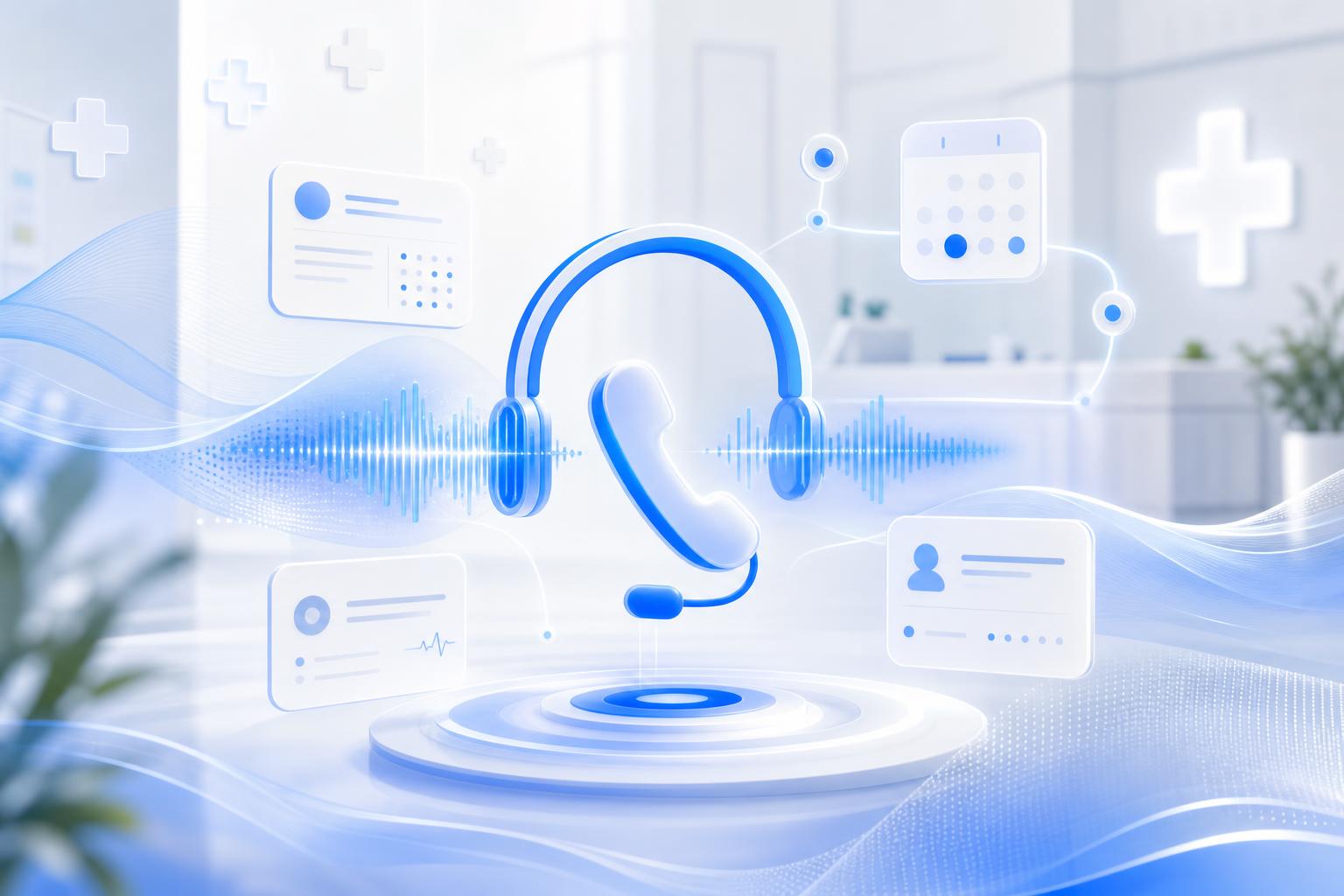
Layered illustration of an AI receptionist with cobalt sound waves and floating appointment cards

<2

Rings before answer

24/7

Coverage, no exceptions

+25%

Avg lift in booked appts

7–14d

Install timeline

Industry data on missed calls in healthcare is consistent and brutal. Roughly 30 to 40 percent of inbound calls to a typical multi-location practice go unanswered or roll to voicemail, and the majority of those callers do not call back. At a $2,000 to $20,000 patient lifetime value, that single number is the most expensive line item on your P&L, and it is invisible because it never enters a CRM and never appears on a marketing report.

Rocklane AI Intake closes the leak. A natural-voice AI receptionist answers every call within two rings, twenty-four hours a day, including weekends and holidays. It is trained on your service lines, your providers, your insurance posture, and your tone. It qualifies the patient, books the appointment directly into your scheduling system, and escalates to a human within seconds when policy or sensitivity requires.

This page covers the architecture, the integrations, the escalation logic, the compliance posture, and what a 7 to 14 day install looks like for a single-location practice or a multi-location group.

What's included

Our service provides a complete capability set from day one.

Natural-voice AI with sub-500ms response latency

Same agent on inbound voice and on-site chat

Trained on your service lines, providers, and scheduling rules

Direct booking into the major EHR/PMS platforms

Insurance and pricing question handling

Sensitivity-based escalation to your front desk or on-call line

HIPAA-aware using minimum-necessary capture and BAAs

Conversation summaries delivered to your CRM and queue

Wired into the same reporting dashboard as the rest of the stack

Per-call recording, transcript, and outcome tag stored for QA review

01 / 07

The most expensive number on your P&L is the one nobody measures.

Walk into a typical multi-location dental, medical, or aesthetic group on a Monday morning and look at the call log from the weekend. Dozens of calls came in. Most went to voicemail. A meaningful share never got returned. That same group is spending five or six figures per month on paid acquisition to generate the calls in the first place.

The math is clinical. If twenty new patient calls per week go unanswered, and even half of those callers represented a real booking opportunity, and the average patient is worth $5,000 in lifetime value, the leak is on the order of $2.5 million in unrealized revenue per year. That calculation applies per location.

AI intake exists because no human-staffing model can fix this economically. Twenty-four-hour live coverage with quality and consistency is structurally too expensive, but AI makes it possible.

02 / 07

How the agent actually works.

Inbound calls hit your tracking number. The AI agent answers within two rings using a natural voice rather than IVR menus or prompts to press a number. It greets the caller using your scripted opener, listens to the reason for the call, and routes the conversation against the playbook we trained for you. This includes identifying new versus existing patients, service lines of interest, insurance posture, and urgency.

If the request is bookable and within the agent's confidence band, it offers slots from your live scheduling system, confirms the appointment, and reads back the details. If the request is outside the playbook, such as a clinical question, a complaint, an emotionally charged caller, or an explicit request for a human, it escalates within seconds to your front desk during hours, or to your defined on-call line outside hours, with a written summary of the conversation attached.

How AI intake plugs into acquisition

03 / 07

One unified agent for voice and chat.

The on-site chat widget runs on the same trained agent, with the same playbook, the same booking integration, and the same escalation logic. Patients who land on a service-line page from a paid ad do not get a generic bot asking how it can help. They receive the same intake experience as a phone call, specifically scoped to the page they arrived on.

Because the agent is unified, attribution stays clean. The conversation knows which page the visitor was on, which campaign brought them, the relevant service line, and the outcome. That data flows directly into the reporting layer.

How the chat widget lives on AI Websites

04 / 07

Integrations built to fit your stack instead of replacing it.

Rocklane AI Intake integrates directly with the major dental, medical, and aesthetic scheduling platforms. Where a direct integration does not exist, we use webhook bridges and signed appointment-write APIs so booking still lands in your system without exposing PHI to anything that is not already part of your trusted stack.

Call tracking, CRM, and reporting integrations are built in. Conversation summaries flow to your CRM. Appointment outcomes feed back into the attribution model. The front desk gets a single triaged queue across calls, chats, and forms instead of three separate inboxes.

05 / 07

The logic behind when the AI hands off and when it does not.

Three triggers escalate a conversation to a human. These include explicit patient requests, sensitivity heuristics for clinical urgency, distress, or complaints, and any case outside the agent's documented confidence band. Escalation is sub-second to your front desk during hours, or to your defined on-call line outside hours.

The escalation includes a written summary of the conversation so the human picking up does not have to ask the patient to repeat themselves. The result is a hybrid model that captures the volume only AI can handle while preserving the human judgment that high-consideration care requires.

How conversations feed reporting

06 / 07

Compliance posture designed to be HIPAA-aware.

Patient intake is a high-stakes data surface. Rocklane AI Intake is designed with minimum-necessary data capture as the default. We do not pipe PHI to ad pixels or marketing analytics. We sign BAAs with the underlying voice and language model providers where required. Conversation logs are encrypted at rest, access-controlled per location and per role, and retained on a documented schedule.

Compliance is not an add-on but a configuration of the architecture. Your compliance team owns the final review, and the platform is built so that this review is short rather than a total renovation.

07 / 07

Install timeline and ongoing operation.

Standard install is seven to fourteen days. Week one trains the agent on your service lines, providers, scheduling rules, insurance posture, and tone, calibrated against transcripts of real calls your front desk has historically handled well. Week two A/B tests the agent against a small slice of inbound traffic, validates booking accuracy, and tunes escalation thresholds before going to full production.

Once live, the agent is reviewed weekly. Conversation samples are audited, escalation rates are tuned, and new service lines or providers are added as your business evolves. The playbook is refined against live outcome data, making the system sharper every quarter.

See pricing and other systems

Frequently asked

Common questions from buyers.

Is this a chatbot or an actual AI receptionist?
Both. The same AI agent answers inbound voice calls and on-site chat. It uses a real conversational voice instead of IVR menus, qualifies the patient, books directly into your scheduler, and escalates to a human when policy or sensitivity requires it.
What scheduling and EHR systems do you integrate with?
Direct integrations with the major dental, medical, and aesthetic platforms. Where a direct integration does not exist, we use webhook bridges and signed appointment-write APIs so booking still lands in your system without exposing PHI.
Will it sound like a robot?
No. The voice is natural, latency is sub-500ms in normal conditions, and the agent is trained on your tone, scripts, and provider names. Most patients do not realize they are speaking with AI until told.
What about HIPAA and PHI?
The intake layer is designed with minimum-necessary capture. Identifiable PHI is not piped to ad pixels or marketing analytics. BAAs are signed with the relevant subprocessors. Conversation logs are stored under access controls scoped per location and per role.
How does it handle complex callers, angry, confused, or clinical?
Three escalation triggers cover explicit patient requests, sensitivity heuristics such as clinical urgency or distress, and any case outside the agent's confidence band. Escalations route to your front desk or on-call line within seconds, accompanied by a written summary of the conversation.
How fast does it install?
Standard install is 7 to 14 days from kickoff to live. Week one trains the agent on your service lines, providers, scheduling rules, and tone. Week two A/B tests against a small slice of inbound traffic before going to full production.

Related revenue systems

Keep exploring the infrastructure.

Ready to engineer the next quarter of revenue?

Book a 30 minute strategy call so we can map your funnel, identify the highest leverage system, and ship within 30 days.